Imbibe will be closed on October 3, 4, 17, 18, 25, and 26. Please expect delays in responses during this time.

Imbibe Shares Lemonade Insights as Manufacturers Adjust Sugar, Calorie Content for Lemonades

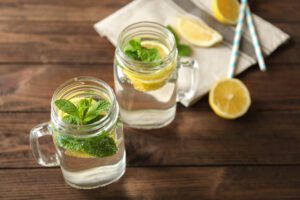
mason jars of lemonade with paper straws

A concept in numerous video games is when characters reach a checkpoint to save the progress they have made during the game. Should the character lose, they will go back to the checkpoint instead of having to restart at the beginning. Although lemonades have been a staple in many consumer homes, concerns about its sugar content have beverage-makers reverting to a checkpoint where they are maintaining the goodwill with consumers but altering their formulation strategy.

“Consumer avoidance of sugar-heavy beverages due to their perceived health detriments has posed an increasing threat to juice producers, including lemonade beverages,” says Dmitry Diment, senior industry research analyst at IBISWorld, New York. “A 2015 study published in the Nutrition Journal found that, on average, fruit juice contains 45.5 grams of fructose concentrate per liter, which is slightly less than the 50 grams of fructose contained in a liter of soda.

“A May 2019 publication by the American Medical Association reported similar health consequences when consuming 100% fruit juice as other sugary beverages,” he continues. “As consumers have become more health conscious, they have shied away from sugary lemonade drinks.”

Diment notes that beverage-makers in response are adapting their formulations to support these health conscious goals.

“Although lemonade contains natural and added sugars, producers have rebranded and reformulated goods,” he says. “Producers have successfully commercialized the benefits of fruit as an essential part of a healthy diet.”

To read the full article, visit Beverage Industry.
Keep Reading:

Decoding Flavor: Imbibe’s Lauren Senne on Taste Modulation, Bitter Blockers, and What It Really Takes to Formulate Great Beverages

Taste modulation is its own discipline. Maskers and bitter blockers aren't the same thing — bitter blockers work at the receptor level, physically blocking the signal, while maskers shift the overall flavor system.
READ MORE

What’s Driving Flavor in 2027 — And What It Means for Beverage Innovation

Explore Imbibe's 2027 Flavor Trends report and discover how formulation complexity, functional ingredients, and evolving consumer expectations are changing the role of flavor in beverage innovation.
READ MORE

Why Relaxation Beverages Require a Different Flavor Strategy

Ingredients commonly associated with calm and relaxation — including ashwagandha, magnesium, valerian root, reishi, l-theanine, and other botanicals — can introduce earthy, woody, bitter, savory, sulfurous, or lingering off-notes.
READ MORE

Notice: Holiday Closure

Imbibe will be closed April 2, 3, 8, and 9. Please expect some delays in our response during these dates.

Privacy Overview

This website uses cookies so that we can provide you with the best user experience possible. Cookie information is stored in your browser and performs functions such as recognising you when you return to our website and helping our team to understand which sections of the website you find most interesting and useful.